Scaling Adoption: The Infrastructure of Design
Moving beyond pixels to manage technical debt and cross-functional silos for 200+ global teams, resulting in a 65% faster time-to-market.
Executive Summary
The Mission
Joined mid-project to pivot a technically sound library into a culturally accepted "Service."
Scope
Centralized infrastructure for 200+ product teams across 40+ localized markets.
Strategy
Replacing "Gatekeeping" with "Consultancy" via robust DesignOps.
Metric
65% reduction in design-to-dev cycles through component reuse.
The Shift: Culture & Impact
Before (The Pixel Silos)
- • 37+ button variations across product flows.
- • Teams "detached" from the system to avoid rigidity.
- • 30% dev time lost to UI rework and drift.
After (The Collective)
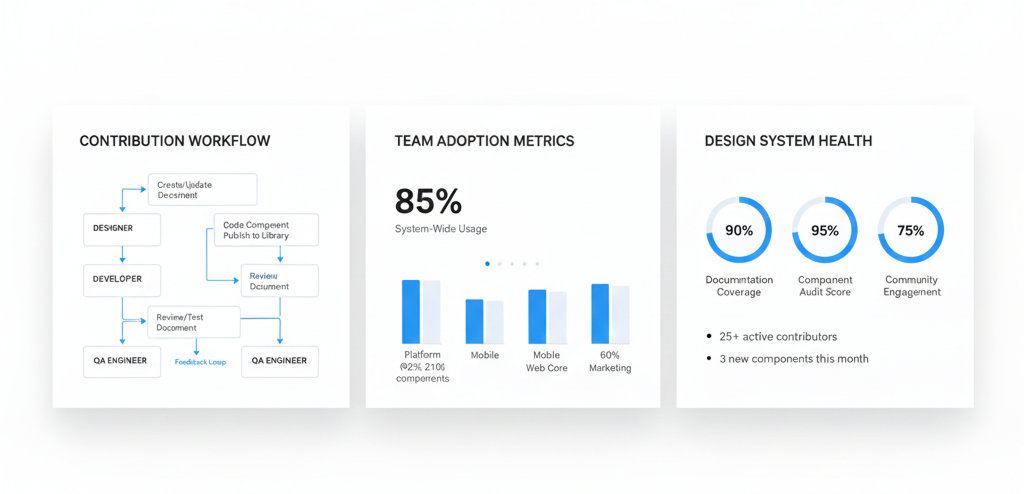
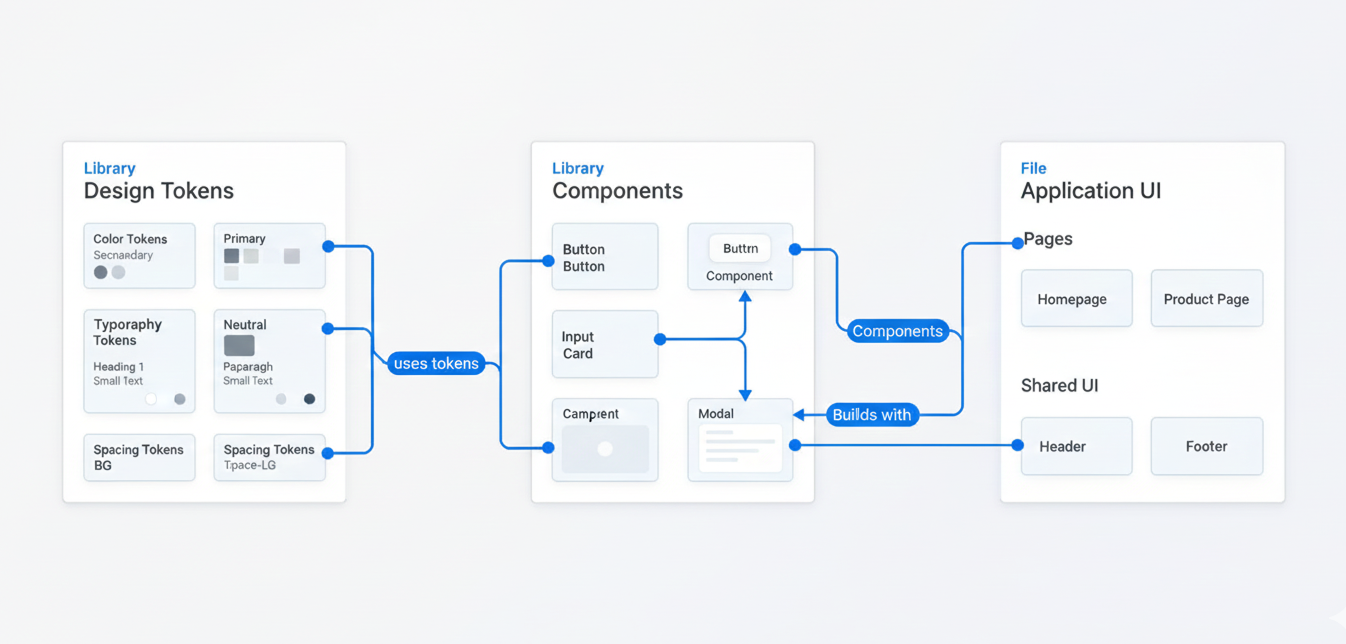
- • 94% UI consistency via unified token architecture.
- • 89% reuse rate—teams now "promote" custom work to the core.
- • 2-hour implementation for complex flows (prev. 3 weeks).
DesignOps: Bridging the Silos
To win the "Cross-functional Politics," I built a support tier that treated internal teams as customers. This wasn't just documentation; it was a service model.
Slack Tier-1
Real-time triage for implementation blockers. Guaranteed response in under 2 hours.
Office Hours
Bi-weekly consultation for teams building "Custom" patterns to ensure alignment.
The Hub
Integrated Storybook & Figma documentation that serves as the single source of truth.
Strategic Assessment (SWOT)
Strengths
High adoption due to low-friction support systems and robust token logic.
Opportunities
Potential to automate Design Tokens directly into CI/CD pipelines for engineers.
Weaknesses
High human-support overhead; required scaling the support team alongside adoption.
Threats
Technical debt in legacy platforms made 100% parity difficult without refactoring.